Stages of the Sanabres Way
Complete Guide to the Camino Sanabrés
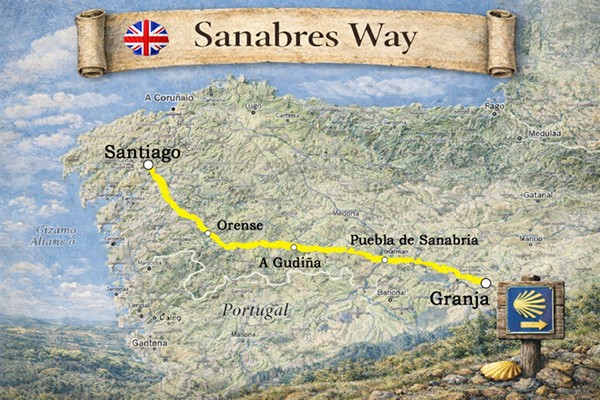
The Camino Sanabrés is one of the most authentic, natural, and spiritual routes of the Camino de Santiago. It represents the western variant of the Vía de la Plata and begins in the historic town of Granja de Moreruela (Zamora), from where it branches off toward Galicia, crossing territories of Zamora (in Castile and León) and Ourense, Pontevedra, and A Coruña (in Galicia).
It is a route of a deeply rural character, with low levels of overcrowding, a strong cultural identity, great natural landscapes, traditional villages, and a pilgrim experience marked by silence, introspection, and connection with nature. The Camino Sanabrés is considered by many pilgrims to be one of the most pure, peaceful, and authentic routes within the Jacobean network.
Where does the Camino Sanabrés start?
Traditional starting point of the Camino Sanabrés
- Main starting point: Granja de Moreruela (Zamora)
- Other common starting points: Puebla de Sanabria, A Gudiña, Ourense
- Approximate total distance: 365 km
- Number of stages: 13–16 stages
- Eligibility for the Compostela: Yes
- Type of route: rural, forest, mountains, valleys, traditional villages
- Profile: relaxed pilgrims, lovers of nature and solitude
Stages of the Camino Sanabrés
The Camino Sanabrés has an approximate length of 365 km from Granja de Moreruela to Santiago de Compostela. Traditionally, it is divided into around 14–15 stages, depending on the pilgrim’s pace and planning.
From Granja de Moreruela, the route heads toward Puebla de Sanabria, crosses the mountains of Sanabria, enters Galicia through A Gudiña, travels through the interior of Ourense, and finally connects with the Camino Mozárabe and the Galician section of the Vía de la Plata before reaching Santiago.
It is one of the most highly valued variants for its balance between nature, culture, heritage, and spirituality.
Frequently asked questions about the Camino Sanabrés
How many kilometers is the Camino Sanabrés?
Approximately 365 km from Granja de Moreruela to Santiago.
How many days does it take to complete?
Between 13 and 16 days, depending on pace and planning.
Where does the Camino Sanabrés begin?
In Granja de Moreruela (Zamora), as a branch of the Vía de la Plata.
Is the Camino Sanabrés difficult?
It has a medium difficulty, with demanding stages in mountainous areas, but without the extreme hardship of the full Vía de la Plata.
What is the best time of year to do it?
Spring and summer. Autumn is also highly recommended for the landscapes.
Does it qualify for the Compostela?
Yes. It far exceeds the required minimum 100 km.
Historical importance of the Camino Sanabrés
The Camino Sanabrés has medieval origins as an alternative pilgrimage route to Compostela for pilgrims coming from the south of the Iberian Peninsula. Historically, it connected the lands of Sanabria and inner Galicia with the main Jacobean routes, serving as a spiritual, commercial, and cultural corridor.
It is a route with a rural tradition, less monumental than others, but deeply authentic and closely linked to the rural, monastic, and traditional pilgrim world.
Stages of the Camino Sanabrés (Granja – Santiago de Compostela)
| # | Stage | Distance |
|---|---|---|
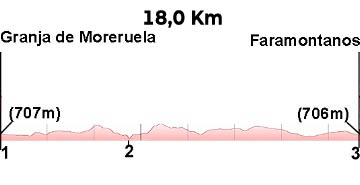
| 1 | Granja – Faramontanos | 18.0 km |
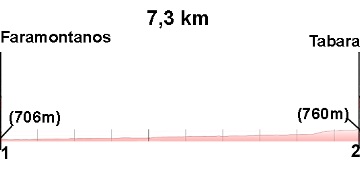
| 2 | Faramontanos – Tábara | 7.3 km |
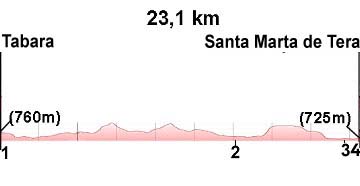
| 3 | Tábara – Santa Marta | 23.1 km |
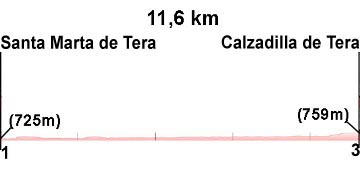
| 4 | Santa Marta – Calzadilla | 11.6 km |
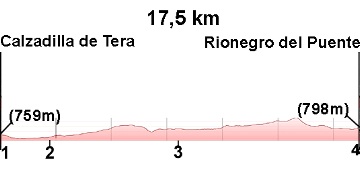
| 5 | Calzadilla – Rionegro | 17.5 km |
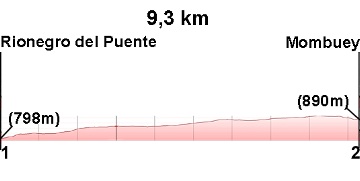
| 6 | Rionegro – Mombuey | 9.3 km |
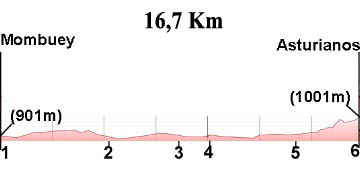
| 7 | Mombuey – Asturianos | 16.7 km |
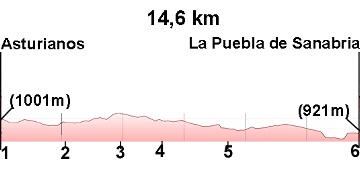
| 8 | Asturianos – Puebla de Sanabria | 14.6 km |
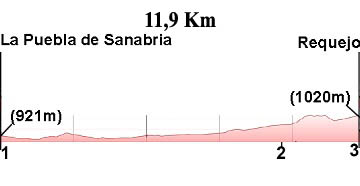
| 9 | Puebla de Sanabria – Requejo | 11.9 km |
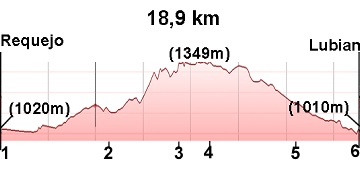
| 10 | Requejo – Lubián | 18.9 km |
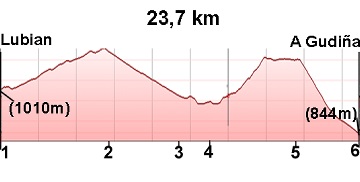
| 11 | Lubián – A Gudiña | 23.7 km |
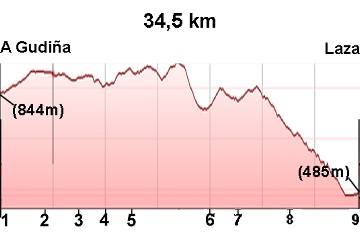
| 12 | A Gudiña – Laza | 34.5 km |
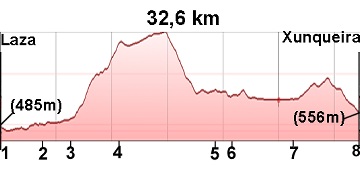
| 13 | Laza – Xunqueira | 32.6 km |
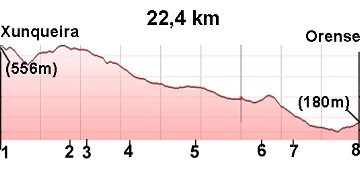
| 14 | Xunqueira – Ourense | 22.4 km |
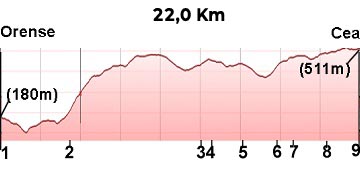
| 15 | Ourense – Cea | 22.0 km |
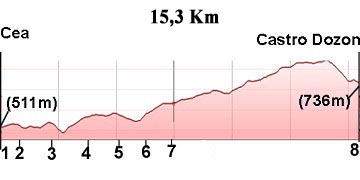
| 16 | Cea – Castro Dozón | 15.3 km |
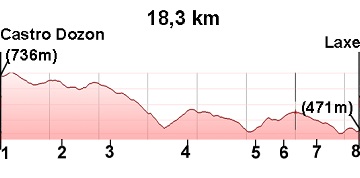
| 17 | Castro Dozón – A Laxe | 18.3 km |
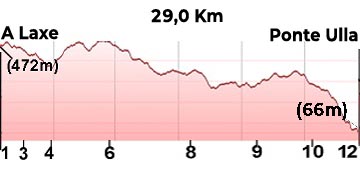
| 18 | A Laxe – Ponte Ulla | 29.0 km |
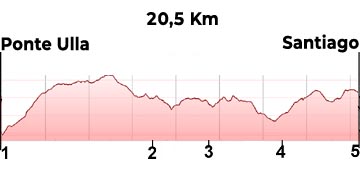
| 19 | Ponte Ulla – Santiago de Compostela | 20.5 km |
Total distance Camino Sanabrés: 386.3 km
Camino Sanabrés statistics
In this guide, at Peregrino Online we have structured the itinerary into two distinct routes: the Vía de la Plata and the Camino Sanabrés. Both routes split in the town of Granja de Moreruela, where the pilgrim can choose between continuing toward Astorga to connect with the Camino Francés or taking the Camino Sanabrés variant toward Galicia.
In some guides both itineraries appear unified into a single route, but at Peregrino Online we believe that this distinction provides greater clarity, geographic coherence, and informational value for pilgrims. Nevertheless, the statistical data presented below correspond to the combined total of the Vía de la Plata and the Camino Sanabrés.
Pilgrimage data
In the year 2025, nearly 9,000 pilgrims completed all or part of the Vía de la Plata. The main starting points were:
- Ourense: approximately 4,500 pilgrims
- Seville: approximately 1,800 pilgrims
At a greater distance, with fewer than 300 pilgrims per year per town, other starting points appear such as Salamanca, Zamora, and Granja de Moreruela, confirming the decentralized and flexible nature of the itinerary.
Trends and attendance
In recent years, the Vía de la Plata has maintained a stable average of approximately 9,000 pilgrims per year, reflecting a constant and sustained flow, without overcrowding peaks.
Unlike other routes such as the Camino Francés or the Camino Portugués, the Vía de la Plata does not present saturation problems, making it an ideal option for pilgrims seeking a more peaceful, authentic, and solitary experience.
Months with the highest number of pilgrims
The month with the highest attendance is May, followed by June and July.
Climate is a determining factor in date selection:
- Pilgrims who start the route in Seville usually choose April, May, September, and October, avoiding months of extreme heat.
- Those who begin in Galicia mainly opt for June and July, taking advantage of the milder climate.
Pilgrim profile
56% of pilgrims who walk the Vía de la Plata are of Spanish nationality.
Among international pilgrims, the most prominent are:
- Portugal
- Italy
- Germany
- United States
- United Kingdom
- France
Ways of completing the Vía de la Plata
The vast majority of pilgrims complete the Vía de la Plata on foot, although approximately 12% choose to do it by bicycle.
It is a long itinerary, with nearly 1,000 km from Seville, representing a significant physical challenge for walkers. However, due to its continuity of route, progressive profile, and low overcrowding, the Vía de la Plata is considered one of the best Camino de Santiago routes to cycle.
Planning the Camino Sanabrés
Required days
13–16 days from Granja de Moreruela.
Best time
Spring, summer, and early autumn.
Difficulty
Medium.
Infrastructure
- Sufficient network of hostels
- Rural services
- Good signage
- High level of tranquility
Pilgrim preparation
- Average physical condition
- Basic planning
- Proper equipment for mountain terrain
- Weather and rain management
- Orientation in rural areas
Who is the Camino Sanabrés ideal for?
- Pilgrims seeking tranquility
- Lovers of natural landscapes
- People who avoid overcrowding
- Spiritual pilgrims
- Contemplative travelers
- Lovers of rural life
Advantages of the Camino Sanabrés
- Low overcrowding
- High authenticity
- Great natural beauty
- Deep spiritual experience
- Traditional villages
- Silence and reflection
The Camino Sanabrés within the Camino de Santiago
The Camino Sanabrés is one of the purest variants of the Jacobean system. It represents the natural connection between the Vía de la Plata and inner Galicia and is considered one of the most spiritual, peaceful, and authentic routes of the Camino de Santiago.
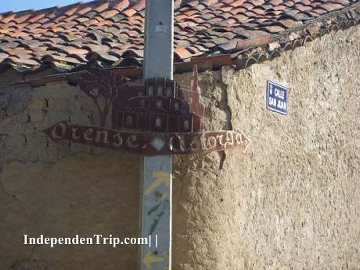
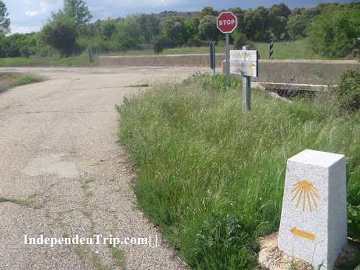
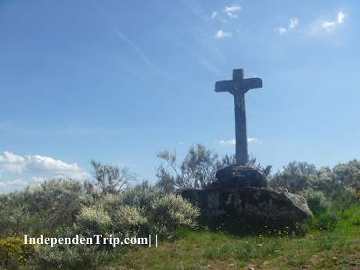
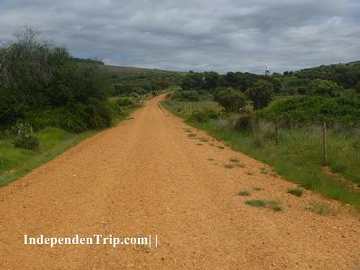
The Camino Sanabrés in images